MS-7-P-5747 Porous glass - epoxy resin systems investigated with AFM and SEM
Porous glasses are particularly interesting materials as they can represent inverse nanocomposites, where the interconnected pores with dimensions of nanometer scale are filled with a reactive polymer. Furthermore, confined reactive polymers are able to react within the pores. This is of particular interest in the polymer research as the reaction kinetics may be strongly driven by the confined environment.
In our studies, a reactive mixture of bisphenol A diglycidyl ether (DGEBA) and diethylenetriamine (DETA) was introduced to porous glass system. In the scope of interest was the influence of pore size, temperature and DGEBA/DETA ratio on the formation of the interphase. Process of preparation of the interphases for the measurements was a particular challenge as the samples based on porous glass were extremely fragile. Successful establishment of the polishing procedure allowed to produce very smooth epoxy - porous glass cross - sections, which were investigated by means of atomic force microscopy (AFM) (Figure 1 and 2) and scanning electron microscopy (SEM) (Figure 3). The studies revealed that depending on the conditions, at which the epoxy - porous glass interphase was formed, the thickness of the interphase and the degree of filling of the pores varied. Moreover, penetration depth of epoxy into porous glass could be influenced by various contributing factors: kinetics of the curing and viscosity. It was found that one of this factor can have a dominant role in porous glass penetration depending on the specific DGEBA/DETA ratio.
The present project is supported by the National Research Fund, Luxembourg
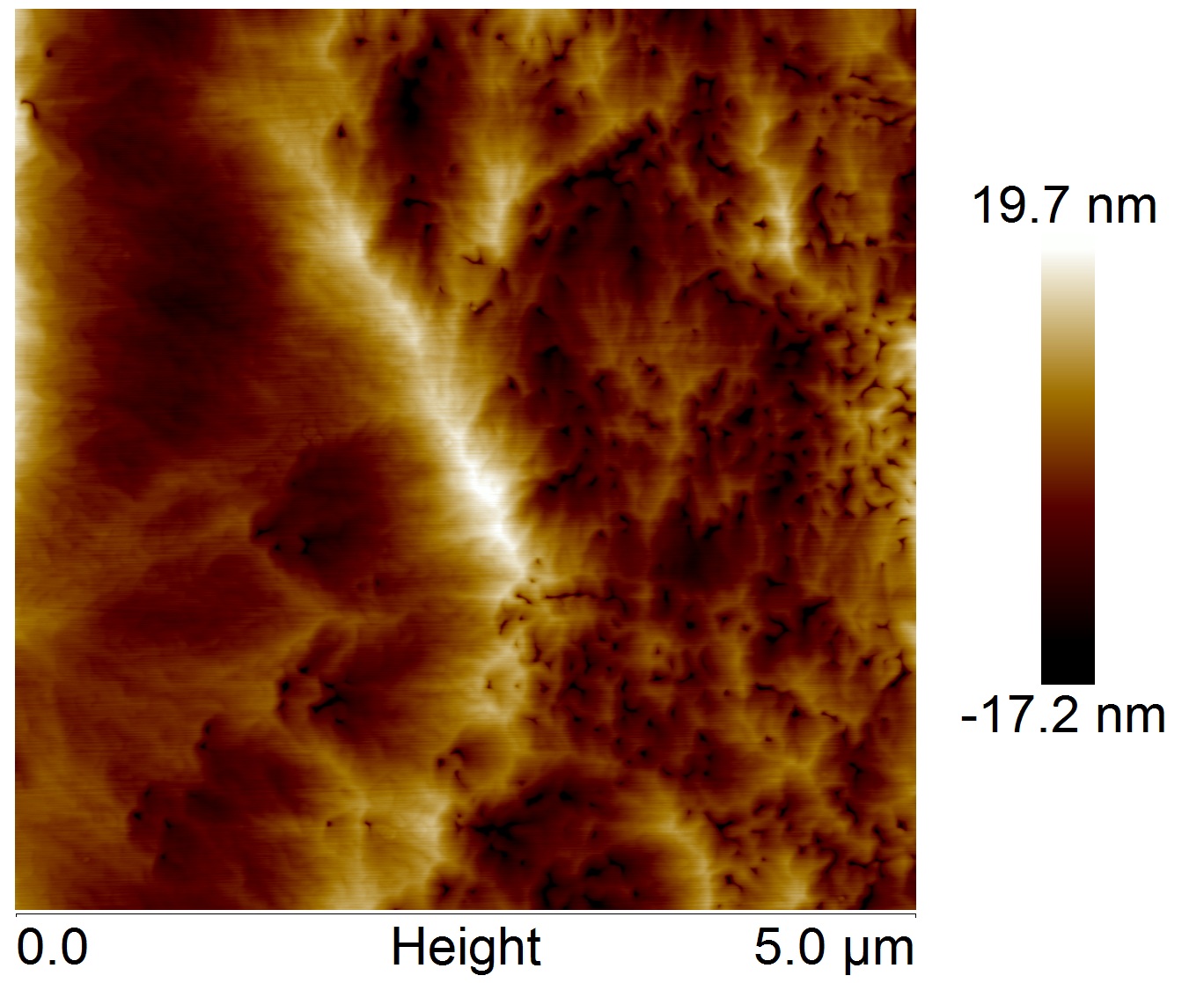
Fig. 1: AFM height map of epoxy resin - porous glass system. Left side shows porous glass filled with epoxy (interphase), while right side presents the unfilled porous glass. |
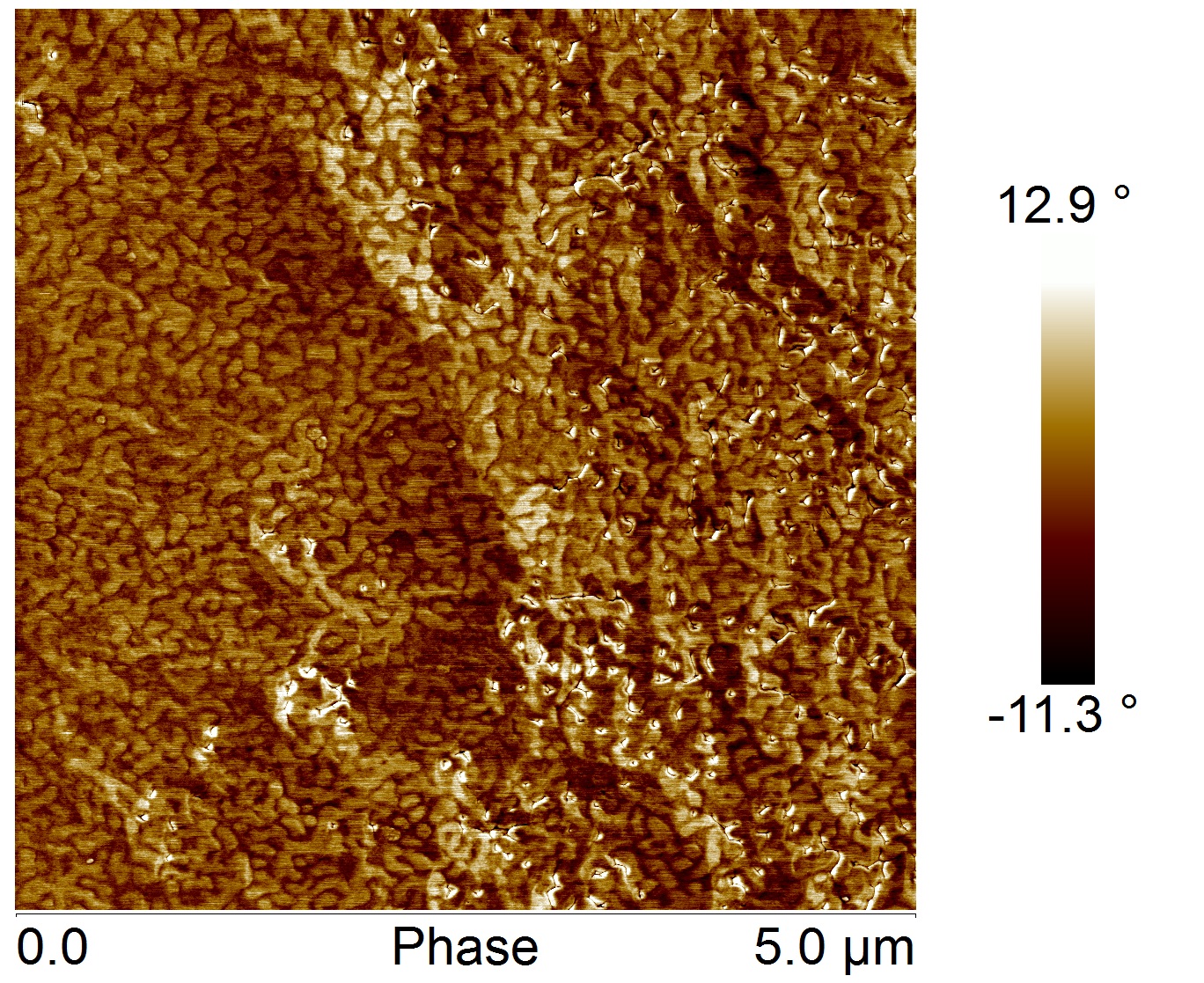
Fig. 2: AFM phase map of epoxy resin - porous glass system. Left side shows porous glass filled with epoxy (interphase), while right side presents the unfilled porous glass. |
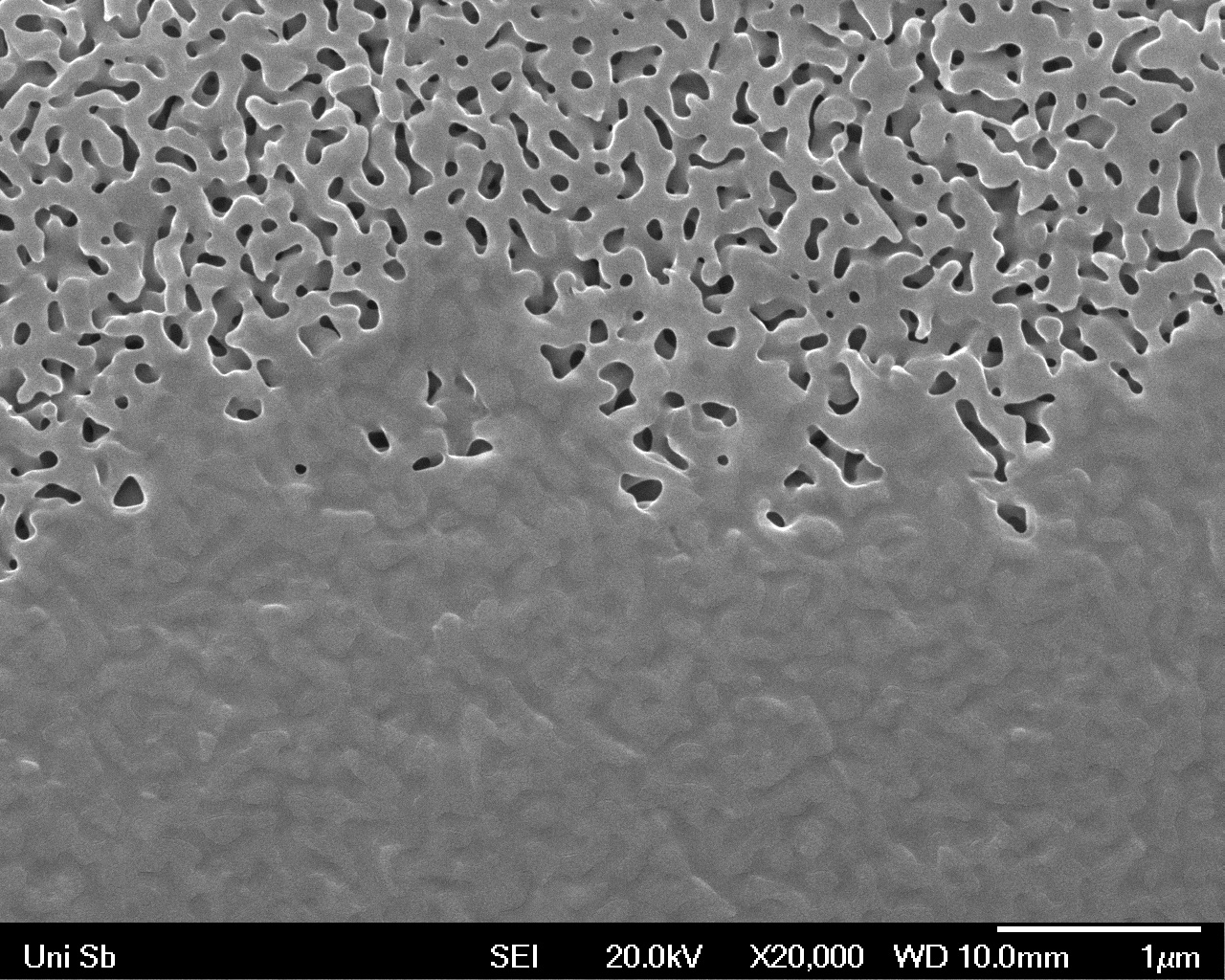
Fig. 3: SEM image of epoxy resin - porous glass system. Upper region presents unfilled porous glass, and lower part: porous glass - epoxy resin interphase. |
|