LS-14-P-1487 Ultrastructural analysis of skin biopsy in patients with cerebral autosomal dominant arteriopathy with subcortical infarcts and leukoencephalopathy (CADASIL)
Cerebral autosomal dominant arteriopathy with subcortical infarcts and leukoencephalopathy (CADASIL) is a hereditary stroke disease caused by the mutation in Notch 3 gene, located on chromosome 19 (19p13). This gene encodes a single-pass transmembrane receptor Notch 3, responsible for maturation of blood vessels in perinatal period and their homeostasis in adult period. Granular osmiophilic material (GOM) is a pathognomonic feature of CADASIL and represents an abnormal accumulation of Notch 3 at the cytoplasmic membrane of vascular smooth-muscle cells (VSMCs) in cerebral and extracerebral blood vessels.
The clinical picture is characterized by repeated ischemic events, cognitive disorders leading to dementia, headache, psychopathological manifestations and a wide range of various pathological events caused by vasculopathy which damages the central and peripheral nervous system, skeletal muscles, skin, heart and other organs.
Our study aimed to determine the significance of ultrastructural analysis of skin biopsy in the diagnosis of CADASIL. This study included patients in whom clinical suspicion of CADASIL was based upon the clinical picture, characteristic changes on the endocranial magnetic resonance imaging (MRI) and positive family history. After a detailed electron microscopy analysis of blood vessels in the dermis, the presence of characteristic granular osmiophilic material (GOM) was detected in 70% of patients, indicating that this method has a relatively high sensitivity level. Besides the presence of GOM deposits in indentations of altered VSMCs or between the remains of degenerated VSMCs, the morphological changes also included disruption of myoendothelial contacts, disoriented cytoskeletal elements of VSMCs and endothelial cells, thickening of VSMCs basal lamina, fibrous changes in the vascular wall and chromatin condensation and peripheral aggregation of nuclear material of VSMCs, suggesting apoptotic cell death.
Ultrastructural examination of skin biopsy is a highly specific and relatively sensitive diagnostic method for establishing a diagnosis of CADASIL. It is very important in the differential diagnosis of CADASIL, especially when genetic analysis is unavailable or limited and can be considered as a method of choice for the diagnosis of CADASIL.
This work was supported by the Ministry of Science and Technological Development of Serbia (Scientific projects No. 41002).
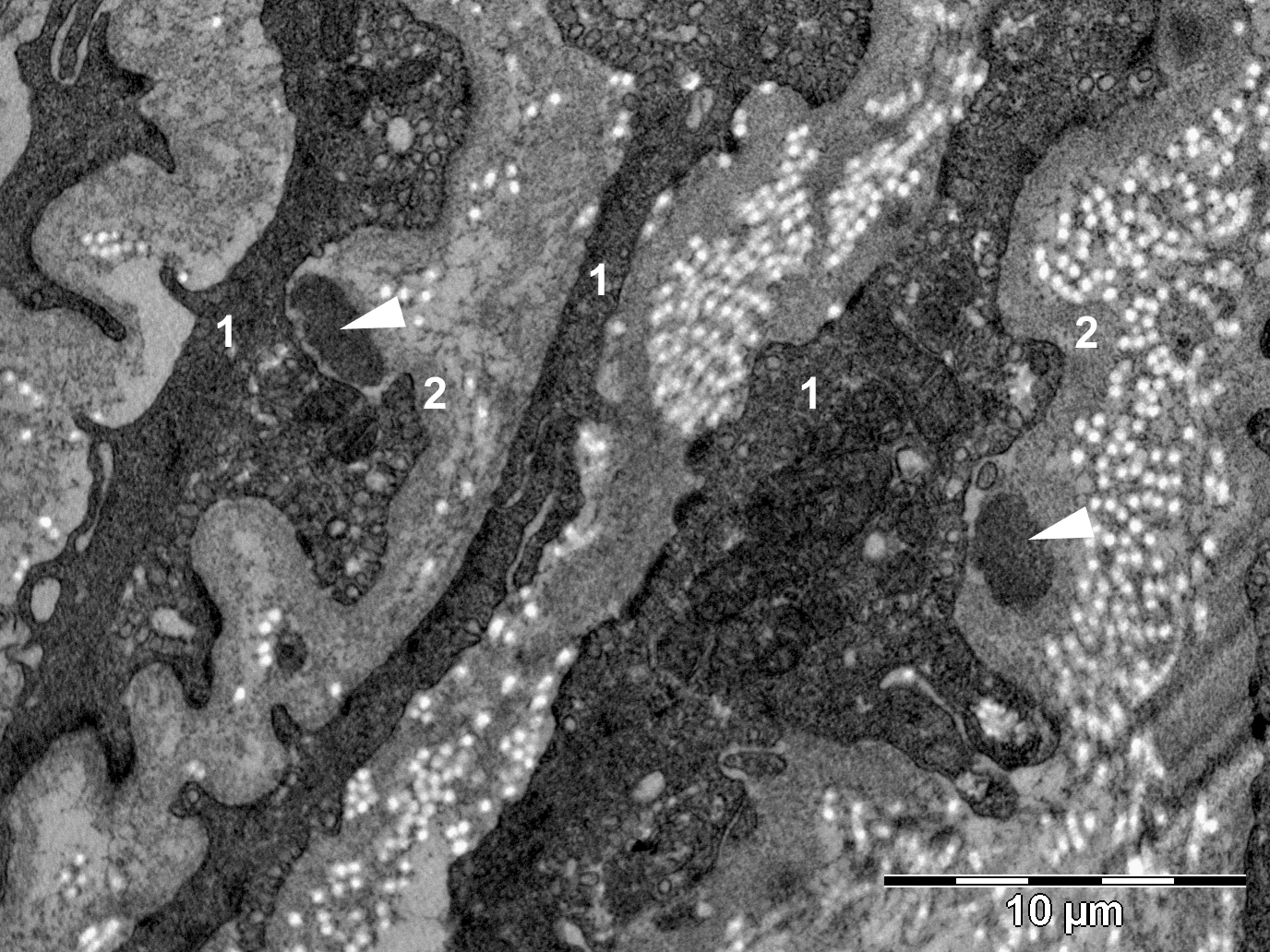
Fig. 1: An arteriole in the dermis. 1. Vascular smooth muscle cell (VSMC), 2. Thickened basal lamina with GOM deposit (white arrowhead) (TEM) |
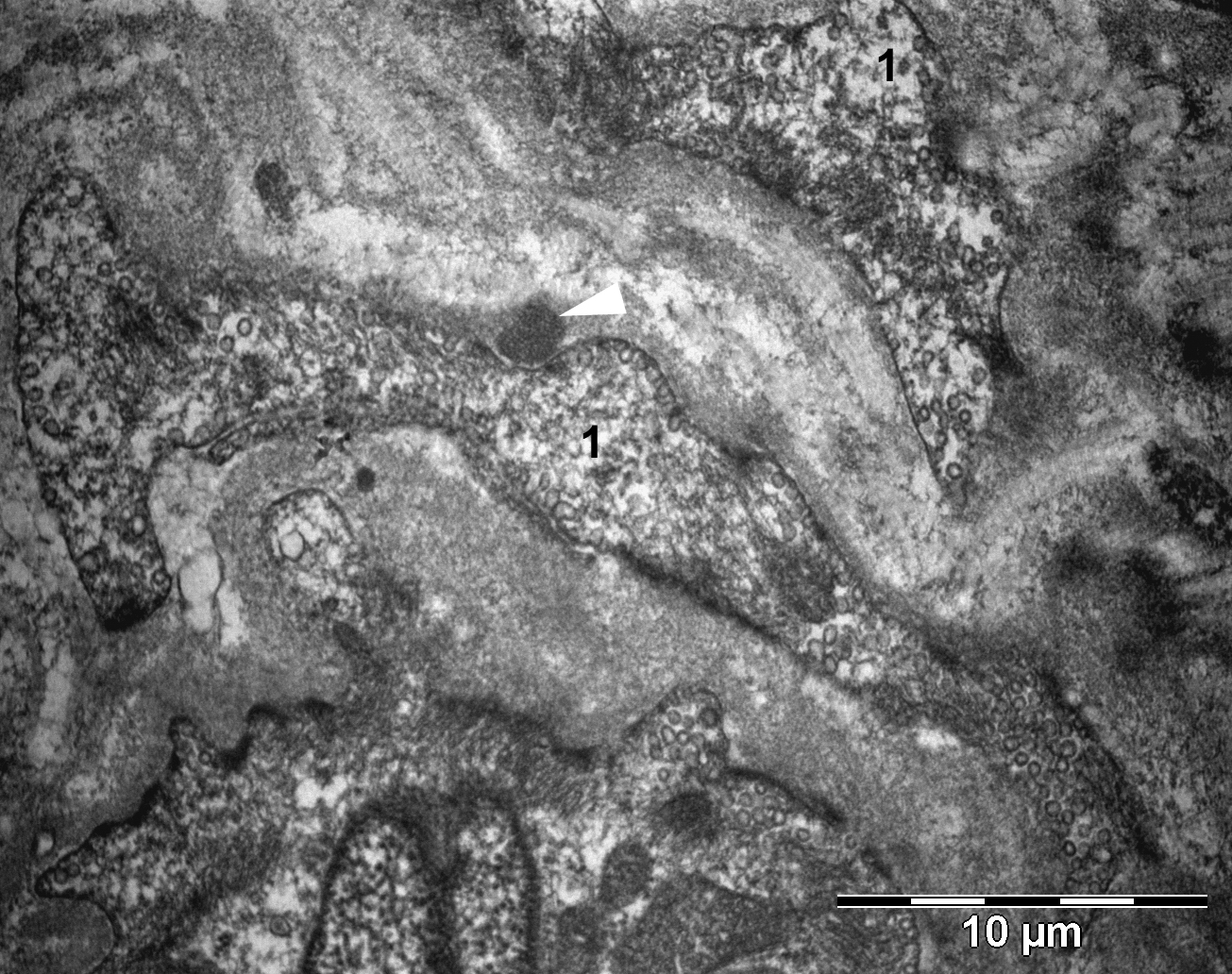
Fig. 2: Degenerated VSMCs (1) with disoriented cytoskeletal elements and GOM (arrowhead) in the thickened basal lamina (TEM) |
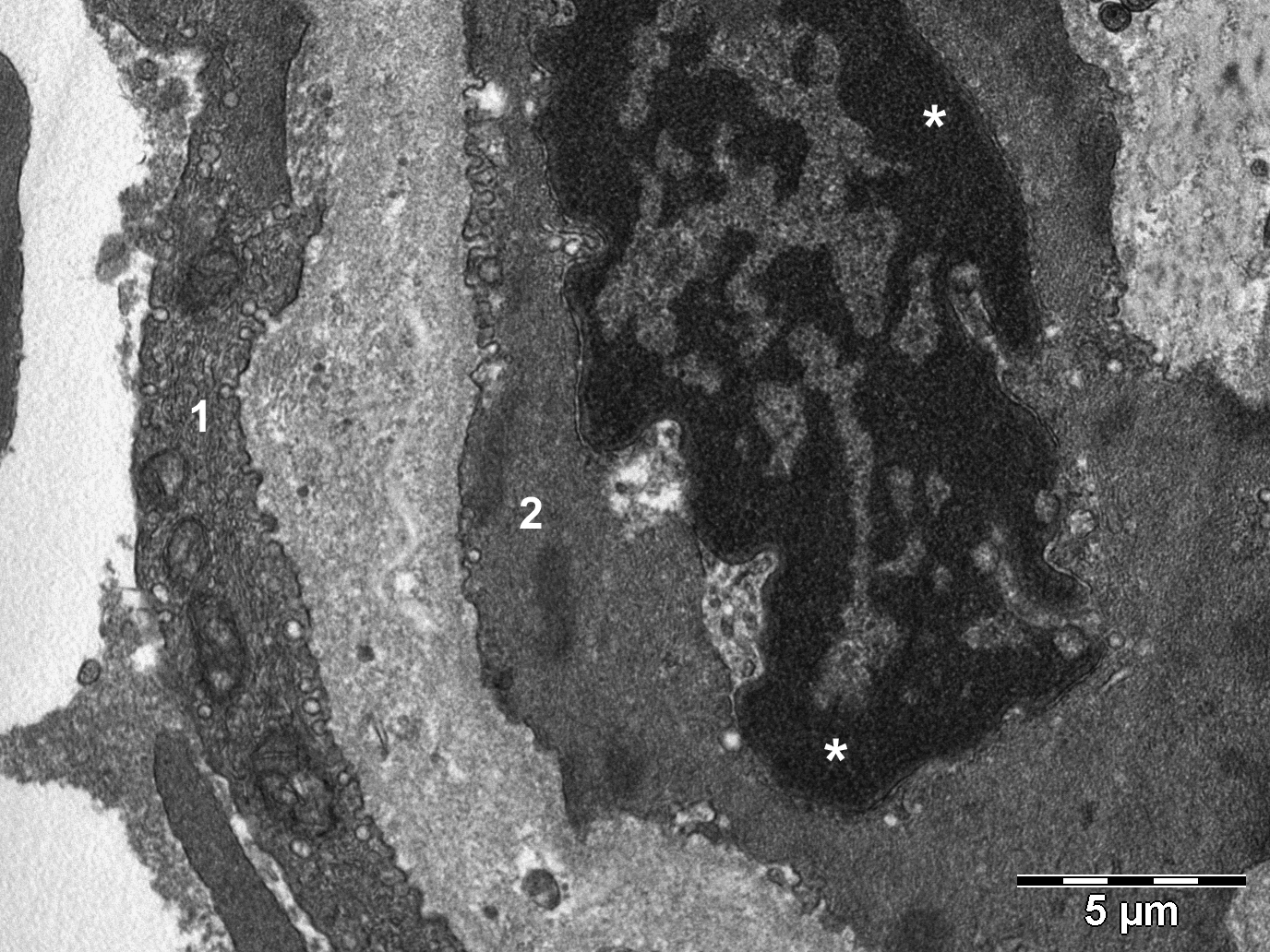
Fig. 3: Small arteriole in CADASIL patient. 1. Endothelial cell 2. VSMC with chromatin condensation at nuclear periphery |
|